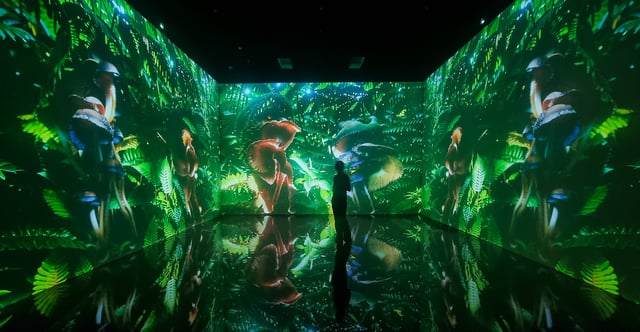
Learning to See is a series of works that use machine learning algorithms to reflect on how our own cognitive biases shape how we ‘see’ and make sense of the world.
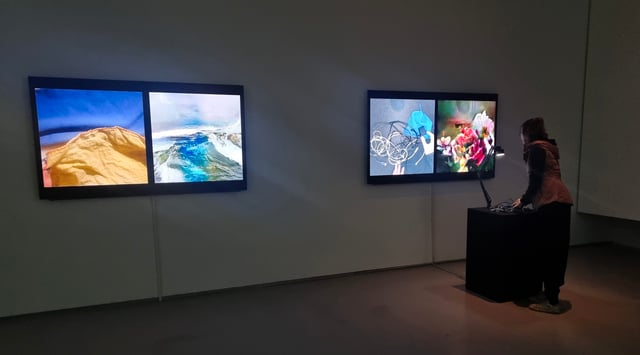
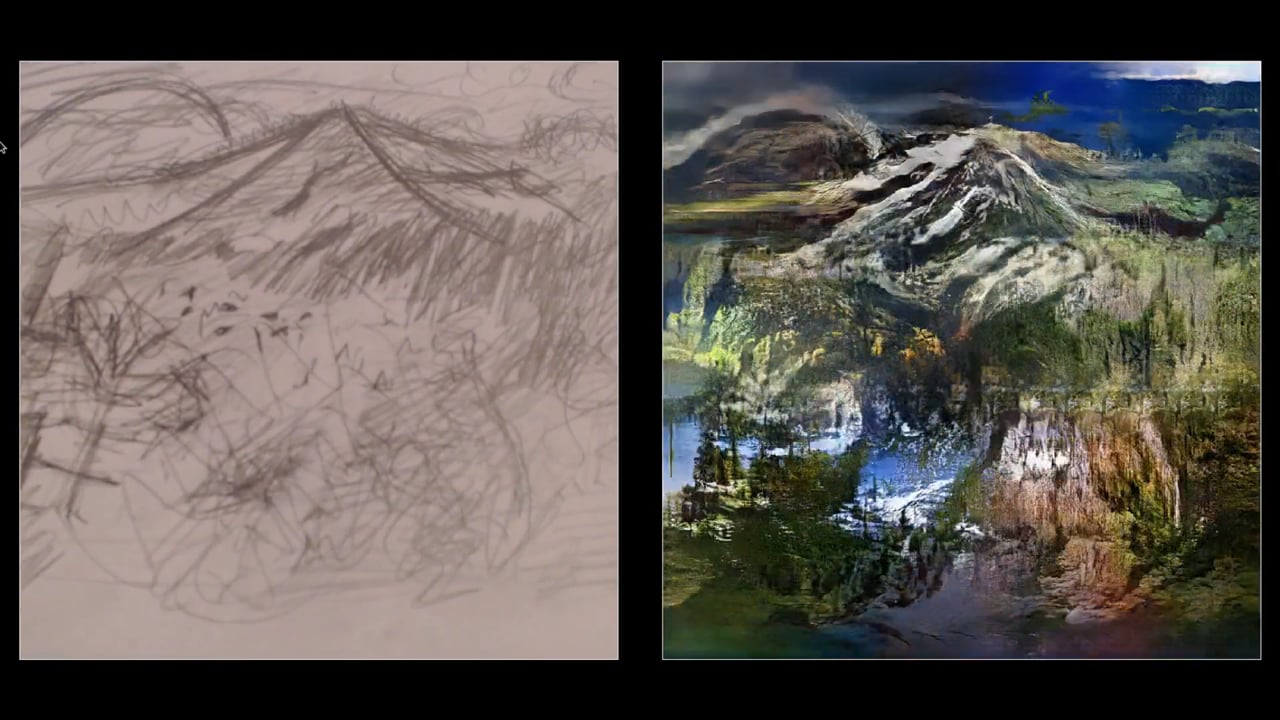
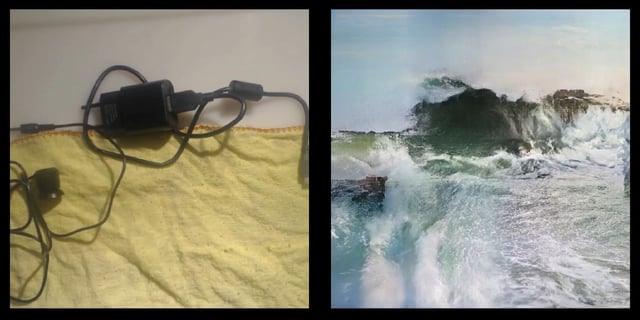
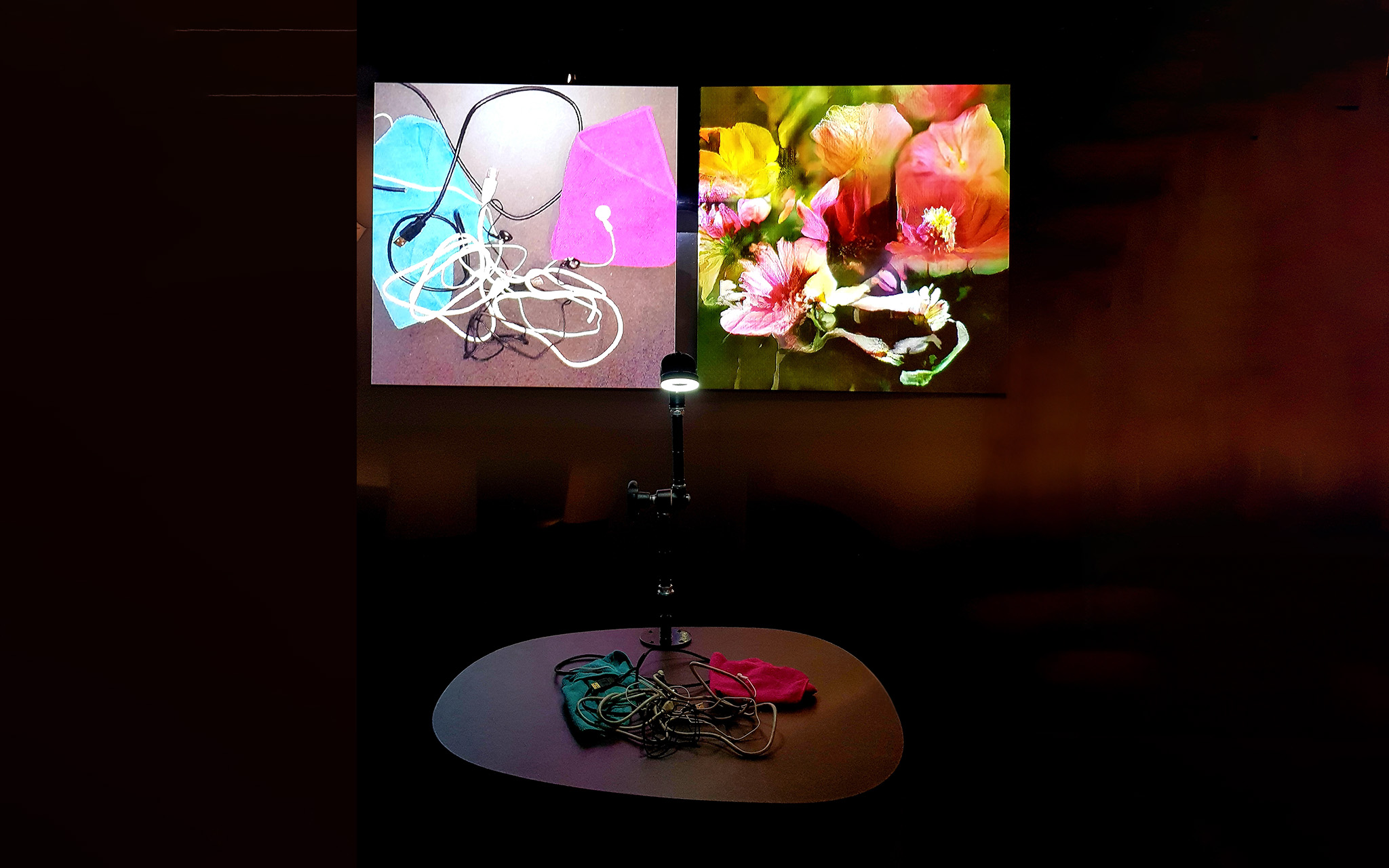
The series includes a number of videos, as well as an interactive installation in which custom neural networks analyse a live camera feed pointing at a table covered in everyday objects, and attempt to reconstruct it in real time, drawing on their prior experience (i.e. training data) and knowledge (i.e. what is learned during training).
An artificial neural network looks out onto the world, and tries to make sense of what it is seeing. But it can only see through the filter of what it already knows.
Just like us.
Because we too, see things not as they are, but as we are.
The work is part of a broader line of inquiry about our cognitive biases, our inability to see the world from others’ point of view, and the resulting social and political polarization.
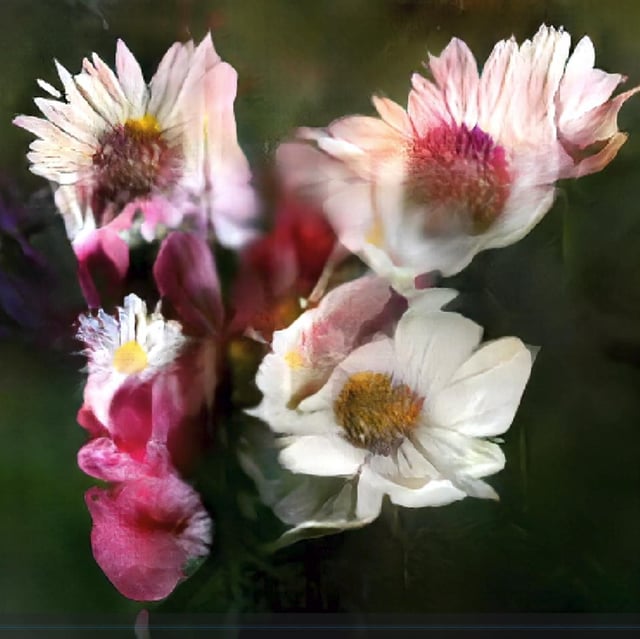
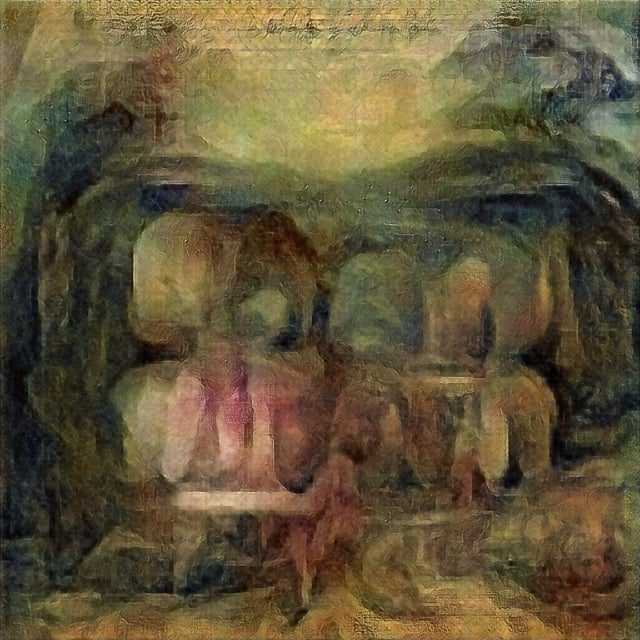
Super high resolution images (268 Megapixel, 16384 x 16384) generated by two custom artificial neural networks, recursively upscaling themselves. Due to the recursive nature of the algorithm, the higher resolution images start producing fractal like effects. The titles are also generated by a third neural network, an image captioning system.
The images on this page are only one megapixel. Some of these works are available at full resolution as (tezos) NFTs at objkt.com (minted on the original hicetnunc platform)
Images
No. 10 - A painting of a person holding a pair of scissorsNo. 11 - A black cat sitting on top of a stone wallNo. 16 - A herd of wild animals walking across a dry grass fieldNo. 17 - A man riding a snowboard down a snow covered slopeNo. 21 - A black and white photo of a boat in the waterNo. 24 - A close up of a bird on a stickNo. 32 - A statue of a man and a woman holding an umbrellaNo. 56 - A group of birds sitting on top of a tableNo. 62 - An old photo of a boat in the waterNo. 71 - A painting of a man on a boat in the water
Google Art Dataset
The artificial neural networks are trained on tens of thousands of images scraped from the Google Art Project, containing scans from art collections and museums from all over the world. These include paintings, illustrations, sketches and photographs covering landscapes, portraits, religious imagery, pastoral scenes, maritime scenes, scientific illustrations, prehistoric cave paintings, abstract images, cubist, realist paintings and many more; an extensive (yet vastly incomplete) archive of human imagination, feelings, desires and dreams; as cataloged and curated by Google, The Keeper of our Collective Consciousness.
We have a very intimate connection with the cloud. We confide in it. We confess to it. We appeal to it. We share secrets with it, secrets that we wouldn’t share with our family or closest friends. And Google is the Keeper of our Collective Consciousness. It sees everything we see, knows everything we know, feels everything we feel. Living up in The Cloud of all places, it watches over us, listening to our thoughts and dreams in ones and zeros. A digital god for our digital culture. And now, just as the Church, the previous bastion of our Spiritual Overseer, used to be the purveyor of Art & Culture; now Google, bastion of our new Digital Overseer, is moving into that role too.
2019 GTC 2019 Keynote with NVIDIA CEO Jensen Huang, NVIDIA, Learning to See shown at 0:32, with the voiceover “[AI is] inventing new ways to bring out the creative genius in us all”, 18 Mar 2019· News· Video
2024 Machine Learning Processes as Sources of Ambiguity: Insights from AI Art, Christian Sivertsen, Guido Salimbeni, Anders Sundnes Løvlie, Steve Benford, Jichen Zhu, Proceedings of the CHI Conference on Human Factors in Computing Systems (CHI ’24), article 165, pp. 1–14, 11 May 2024· Academic paper