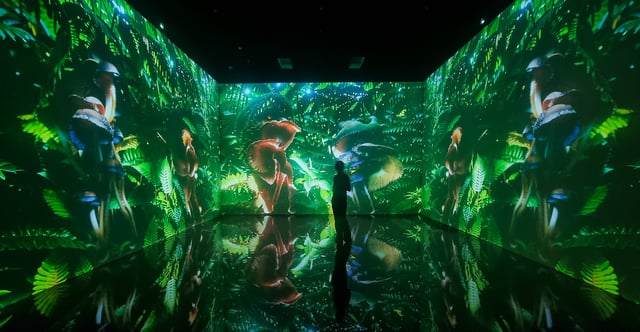
Learning to See is a series of works that use machine learning algorithms to reflect on how our own cognitive biases shape how we ‘see’ and make sense of the world.
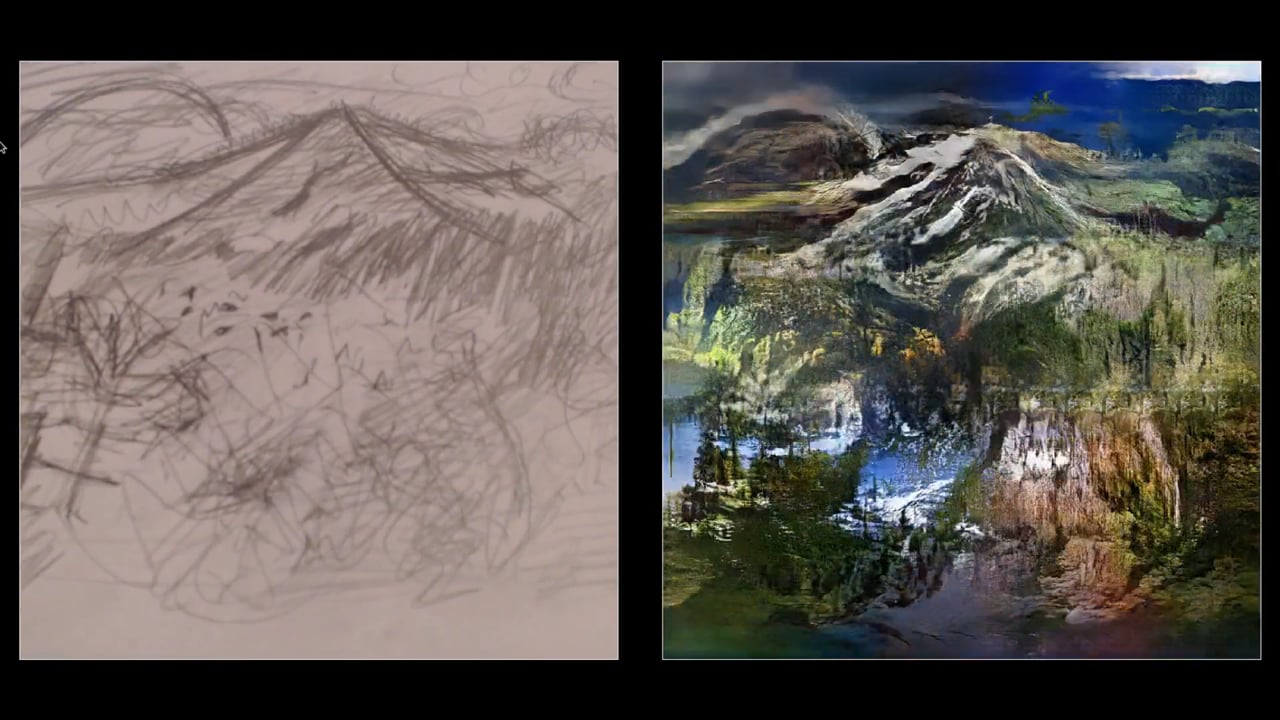
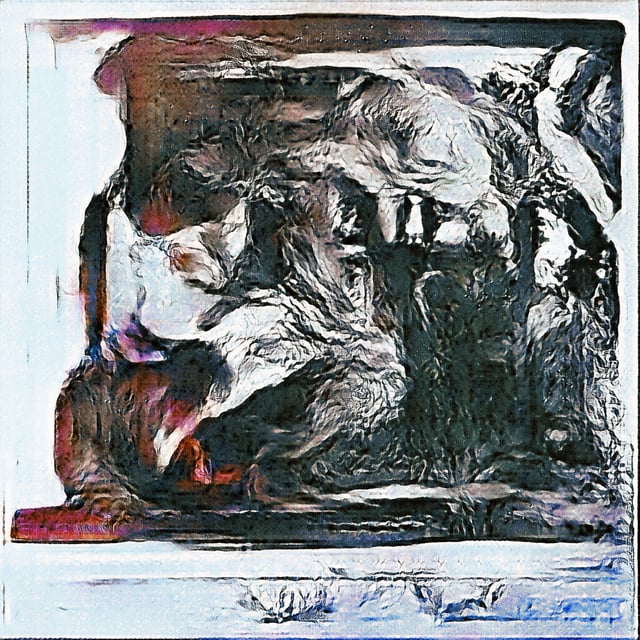
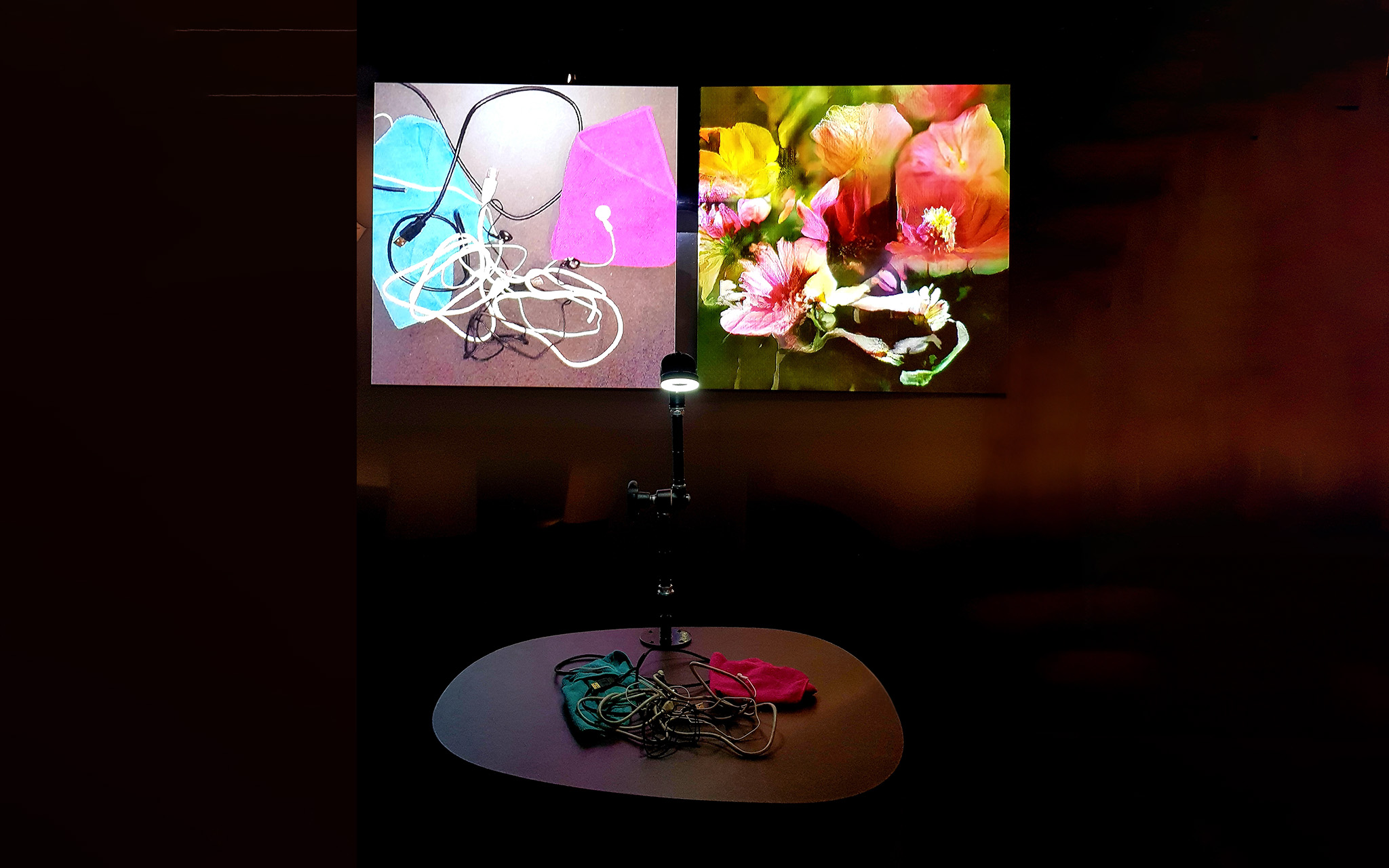
The series includes a number of videos, as well as an interactive installation in which custom neural networks analyse a live camera feed pointing at a table covered in everyday objects, and attempt to reconstruct it in real time, drawing on their prior experience (i.e. training data) and knowledge (i.e. what is learned during training).
An artificial neural network looks out onto the world, and tries to make sense of what it is seeing. But it can only see through the filter of what it already knows.
Just like us.
Because we too, see things not as they are, but as we are.
The work is part of a broader line of inquiry about our cognitive biases, our inability to see the world from others’ point of view, and the resulting social and political polarization.
The picture we see in our conscious mind is not a mirror image of the outside world, but is a reconstruction based on our expectations and prior beliefs.
In this context, the term seeing, refers to both the low level perceptual and phenomenological experience of vision, as well as the higher-level cognitive act of making meaning, and constructing what we consider to be truth.
Our self-affirming cognitive biases and prejudices shape what we see, and how we interact with each other as a result, contributing to our inability to see the world from others’ point of view, fuelling social and political polarization.
The interesting question here isn’t only “when you and I look at an image, do we see the same colors”, but “when you and I read an article, do we see the same story and perspectives?”.
Everything that you see, read, or hear — even these sentences that you’re reading right now — you’re trying to make sense of by relating to your own past experiences, filtered by your prior beliefs and knowledge.
In fact, I have no idea what any of what I’m saying means to any of you. It’s impossible for me to see the world through your eyes, and think what you think, feel what you feel, without having read everything you’ve read, seen everything you’ve seen, lived everything you’ve lived.
This makes empathy and compassion, so much harder than we realize, and so much more invaluable.
Originally loosely inspired by the neural networks of our own brain, Deep Learning Artificial Intelligence algorithms have been around for decades, but they are recently seeing a huge rise in popularity. This is often attributed to recent increases in computing power and the availability of extensive training data. However, progress is undeniably fueled by multi-billion dollar investments from the purveyors of mass surveillance — technology companies whose business models rely on targeted, psychographic advertising, and government organizations focussed on the War on Terror. Their aim is the automation of Understanding Big Data, i.e. understanding text, images and sounds. But what does it mean to ‘understand’? What does it mean to ‘learn’ or to ‘see’?
I released an opensource demo which is the foundation for this and many of the Learning to see works. The demo allows live realtime preprocessing of a camera input (such as a webcam) fed into a neural network for live realtime inference.
2019 GTC 2019 Keynote with NVIDIA CEO Jensen Huang, NVIDIA, Learning to See shown at 0:32, with the voiceover “[AI is] inventing new ways to bring out the creative genius in us all”, 18 Mar 2019· News· Video
2024 Machine Learning Processes as Sources of Ambiguity: Insights from AI Art, Christian Sivertsen, Guido Salimbeni, Anders Sundnes Løvlie, Steve Benford, Jichen Zhu, Proceedings of the CHI Conference on Human Factors in Computing Systems (CHI ’24), article 165, pp. 1–14, 11 May 2024· Academic paper